
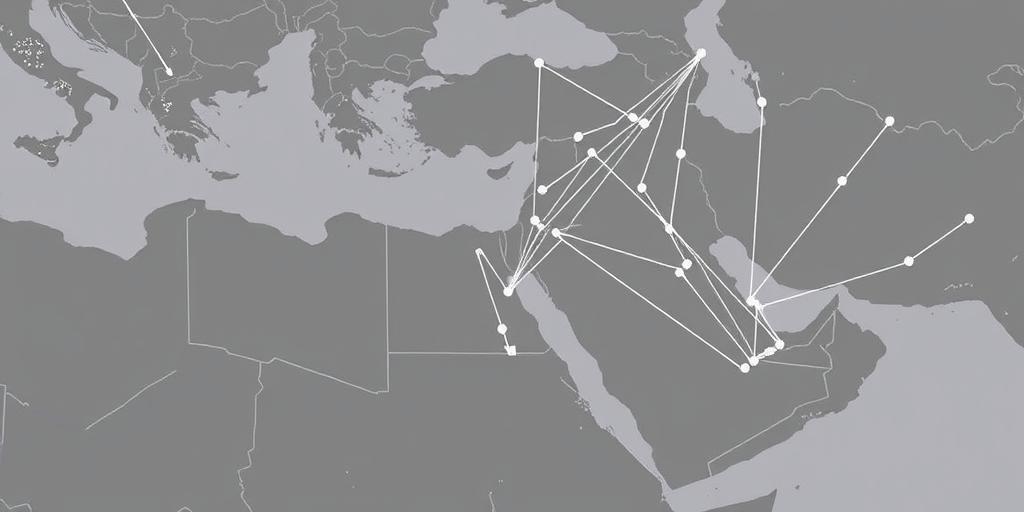
Understanding a Middle Eastern Nation's Role in Regional Dynamics
The Middle East is a complex and strategically vital region, characterized by a web of interconnected political, economic, and social dynamics. Understanding the role of individual nations within this region requires a nuanced approach, considering their historical context, current policies, and relationships with both regional and global powers.
Factors Shaping Regional Influence
Several factors determine a nation's role in the Middle East:
- Geopolitical Location: A country's geographical position significantly impacts its regional importance. Nations bordering critical waterways, possessing strategic land routes, or sharing borders with multiple countries often wield greater influence.
- Economic Resources: Control over vital resources like oil and natural gas provides significant economic and political leverage. Nations with substantial reserves often play a more prominent role in regional and international affairs.
- Political System and Stability: The stability and nature of a nation's political system influence its regional standing. Countries with stable governments and clear foreign policy objectives are often seen as more reliable partners.
- Military Capabilities: A nation's military strength and defense capabilities are crucial in shaping its regional influence. Countries with strong armed forces can project power and deter potential adversaries.
- Diplomatic Relations: A country's relationships with other nations, both within and outside the region, are critical. Alliances, partnerships, and diplomatic initiatives can significantly enhance a nation's influence.
Case Studies of Key Players
To illustrate these dynamics, let's briefly examine a few key players (Note: Specific nations are not named here to maintain neutrality):
- Nation A: This nation, located at a strategic crossroads, leverages its geographical position and robust economy to play a central role in regional trade and diplomacy. Its stable political system and strong alliances further enhance its influence.
- Nation B: Possessing vast oil reserves, this nation exerts considerable economic influence. It actively participates in regional organizations and uses its economic power to promote its interests.
- Nation C: Despite facing internal challenges, this nation maintains a significant military presence and plays a key role in regional security dynamics. Its complex relationships with neighboring countries require careful analysis.
The Impact of External Actors
It is crucial to acknowledge the influence of external actors, such as global powers, on the Middle East. These external players often have their own strategic interests in the region, which can either support or complicate the roles of individual nations.
Conclusion
Understanding a Middle Eastern nation's role in regional dynamics necessitates a comprehensive analysis of its geopolitical location, economic resources, political system, military capabilities, and diplomatic relations, as well as the influence of external actors. By examining these factors, we can gain valuable insights into the complex interplay of forces shaping the region.


