
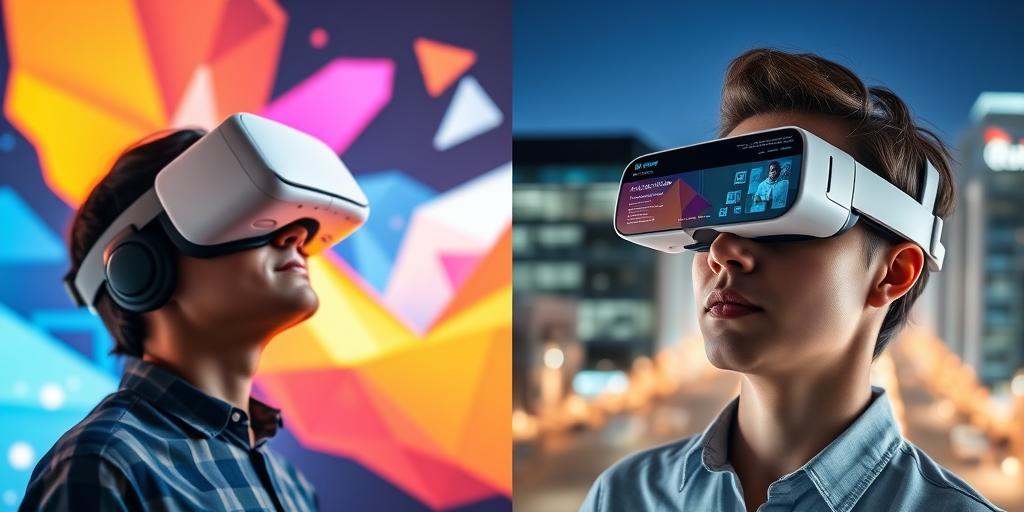
Virtual Reality (VR) vs. Augmented Reality (AR): What's the Difference?
Virtual Reality (VR) and Augmented Reality (AR) are often mentioned together, but they are distinct technologies offering unique experiences. Understanding the differences between VR and AR is crucial for anyone interested in the future of technology, gaming, education, and more. This post will break down the key differences between VR and AR, explore their applications, and discuss their potential impact on various industries.
What is Virtual Reality (VR)?
Virtual Reality (VR) is an immersive technology that completely replaces your real-world environment with a simulated one. Using a VR headset, users can experience and interact with digital worlds that can range from realistic simulations to fantastical environments. The key characteristics of VR include:
- Immersion: VR provides a fully immersive experience, blocking out the real world.
- Hardware: Requires a VR headset and often headphones for audio immersion.
- Applications: Gaming, training simulations, virtual tourism, and remote collaboration.
- Examples: Oculus Rift, HTC Vive, PlayStation VR.
How Does VR Work?
VR headsets typically use stereoscopic displays, presenting slightly different images to each eye to create a sense of depth. Sensors in the headset track your head movements, allowing the virtual environment to shift and adjust accordingly. This creates a realistic and interactive experience.
What is Augmented Reality (AR)?
Augmented Reality (AR) enhances your real-world environment by overlaying digital information onto it. Unlike VR, AR does not replace your surroundings but adds to them. Key characteristics of AR include:
- Enhancement: AR enhances the real world with digital elements.
- Hardware: Can be experienced through smartphones, tablets, or AR glasses.
- Applications: Gaming, retail, navigation, and industrial maintenance.
- Examples: Pokémon GO, Snapchat filters, IKEA Place app, Microsoft HoloLens.
How Does AR Work?
AR uses cameras and sensors to detect the real-world environment. Software then overlays digital content, such as images, text, or 3D models, onto the display. This creates the illusion that the digital content is part of the real world.
Key Differences Between VR and AR
| Feature | Virtual Reality (VR) | Augmented Reality (AR) | | :--------------- | :----------------------------------------------------- | :------------------------------------------------------ | | Environment | Replaces the real world with a simulated environment. | Enhances the real world with digital overlays. | | Immersion | Fully immersive, blocking out the real world. | Partially immersive, blending digital and real elements. | | Hardware | VR headsets and headphones. | Smartphones, tablets, or AR glasses. | | Interactivity | Highly interactive within the virtual environment. | Interactive with digital elements in the real world. |
Applications of VR and AR
Both VR and AR have a wide range of applications across various industries:
Virtual Reality (VR) Applications:
- Gaming: Immersive gaming experiences that place players inside the game world.
- Training and Simulation: Realistic training simulations for pilots, surgeons, and soldiers.
- Education: Virtual field trips and interactive learning experiences.
- Healthcare: Therapy for phobias, pain management, and rehabilitation.
- Entertainment: Virtual concerts, movies, and interactive storytelling.
Augmented Reality (AR) Applications:
- Retail: Virtual try-on of clothes and furniture placement in your home.
- Navigation: Overlaying directions onto the real-world view through your smartphone.
- Industrial Maintenance: Providing step-by-step instructions for repairs overlaid on equipment.
- Marketing and Advertising: Interactive ads and brand experiences.
- Healthcare: Assisting surgeons with real-time data during operations.
The Future of VR and AR
VR and AR technologies are rapidly evolving, with advancements in hardware, software, and connectivity. The future holds even more exciting possibilities:
- Improved Hardware: Lighter, more powerful headsets and glasses with better displays and tracking capabilities.
- 5G Connectivity: Faster and more reliable wireless connections for seamless VR and AR experiences.
- AI Integration: Artificial intelligence enhancing the interactivity and realism of virtual and augmented environments.
- Metaverse Development: VR and AR playing a key role in the development of immersive digital worlds.
Conclusion
Virtual Reality and Augmented Reality are transformative technologies with the potential to revolutionize the way we live, work, and play. While VR offers fully immersive experiences, AR enhances our real-world environment with digital information. Understanding the differences between these technologies is essential for recognizing their unique capabilities and potential applications. As VR and AR continue to evolve, they will undoubtedly shape the future of numerous industries and create new opportunities for innovation and creativity.


