
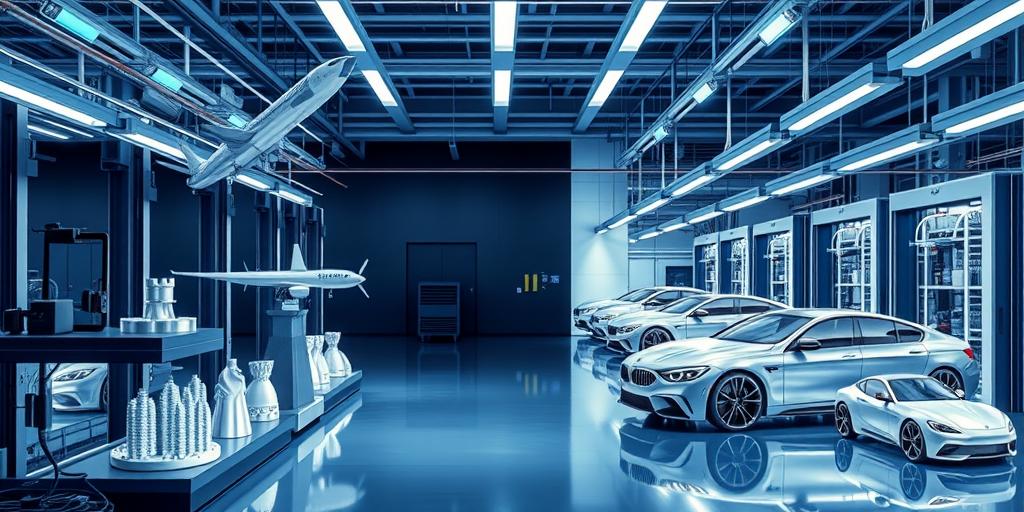
3D Printing Innovations Reshaping Manufacturing
3D printing, also known as additive manufacturing, is revolutionizing the manufacturing industry. This technology involves building three-dimensional objects from a digital design by adding successive layers of material, whether it's plastic, metal, ceramics, or composites. 3D printing is transforming traditional manufacturing processes across various sectors by offering greater design flexibility, faster prototyping, and reduced production costs.
Design Flexibility and Customization
One of the most significant advantages of 3D printing is its ability to create complex geometries and intricate designs that are difficult or impossible to produce using conventional manufacturing techniques. This design flexibility enables manufacturers to develop highly customized products tailored to specific customer needs. For example, in the aerospace industry, 3D printing is used to create lightweight, high-performance components with optimized shapes that improve fuel efficiency and performance. In the healthcare sector, 3D printing enables the production of patient-specific implants and prosthetics, leading to better outcomes and improved quality of life.
Rapid Prototyping
3D printing significantly accelerates the prototyping process. Traditional prototyping methods often require lengthy lead times and high costs, as they involve creating molds and tooling. With 3D printing, manufacturers can quickly produce prototypes directly from digital designs, allowing for rapid iteration and testing. This capability enables companies to bring new products to market faster and more efficiently. Automotive manufacturers, for instance, use 3D printing to create prototype parts and components, reducing the time and cost associated with traditional prototyping methods.
Reduced Production Costs
While the initial investment in 3D printing equipment can be substantial, the technology offers significant cost savings in the long run. 3D printing reduces material waste by only using the material needed to create the object, unlike subtractive manufacturing processes that involve cutting away excess material. Additionally, 3D printing enables on-demand production, eliminating the need for large inventories and reducing storage costs. Furthermore, 3D printing can consolidate multiple parts into a single component, reducing assembly time and labor costs. Small and medium-sized enterprises (SMEs) can especially benefit from these cost-saving advantages, allowing them to compete more effectively with larger companies.
Material Innovations
The range of materials compatible with 3D printing is constantly expanding, driving further innovation in manufacturing. Advances in materials science have led to the development of high-performance polymers, metals, ceramics, and composites suitable for 3D printing. These materials offer enhanced mechanical properties, thermal stability, and chemical resistance, making them suitable for a wide range of applications. For example, high-strength titanium alloys are used in 3D-printed aerospace components, while biocompatible polymers are used in medical implants. Ongoing research and development efforts are focused on creating new materials with tailored properties to meet the demands of various industries.
Applications Across Industries
3D printing is transforming manufacturing across a wide range of industries:
- Aerospace: Manufacturing lightweight structural components, engine parts, and interior components.
- Healthcare: Producing custom implants, surgical guides, prosthetics, and medical devices.
- Automotive: Creating prototype parts, tooling, and customized components for vehicles.
- Consumer Goods: Manufacturing personalized products, customized packaging, and intricate designs.
- Electronics: Producing circuit boards, housings, and connectors.
The Future of 3D Printing in Manufacturing
The future of 3D printing in manufacturing looks promising, with ongoing advancements in technology, materials, and applications. As 3D printing becomes more accessible and affordable, it will continue to drive innovation and transform manufacturing processes across industries. The integration of 3D printing with other advanced technologies, such as artificial intelligence (AI) and the Internet of Things (IoT), will further enhance its capabilities and enable new possibilities for manufacturing. Companies that embrace 3D printing and integrate it into their operations will gain a competitive edge in the rapidly evolving manufacturing landscape.


