
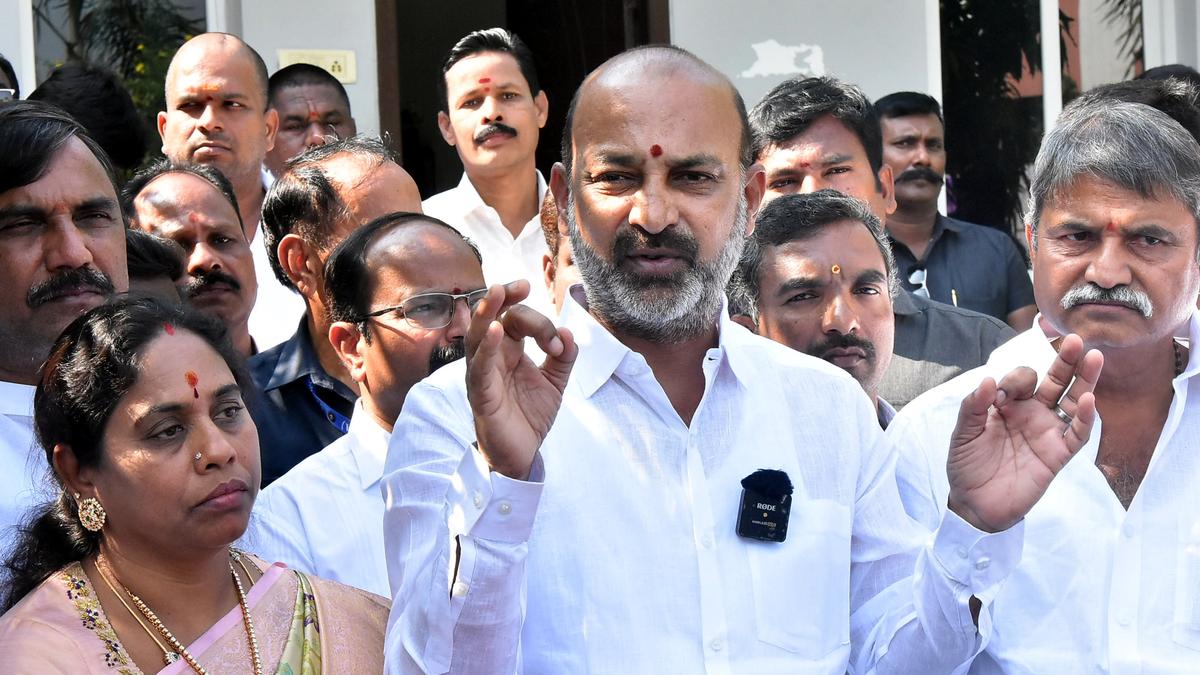
PMAY Housing Controversy in Telangana: A Political Storm Brews
The political landscape of Telangana is heating up as a controversy erupts over the Pradhan Mantri Awas Yojana (PMAY), a flagship housing scheme of the Indian government. Union Minister of State for Home Affairs, Bandi Sanjay, has asserted that the central government is ready to sanction houses under PMAY, but with a significant condition: no renaming of the houses as "Indiramma Illu." This seemingly simple statement has ignited a fiery debate, pitting the BJP against the ruling BRS and Congress parties. Get ready to dive into the heart of this controversy and uncover the shocking truth behind the clash.
The Modi Government's PMAY Housing Scheme: A Lifeline for the Poor?
The PMAY scheme is designed to provide affordable housing to millions of underprivileged citizens across India. It aims to offer a helping hand to those struggling to secure safe and decent homes, promising a path to improved living conditions and social upliftment. This initiative serves as a major social welfare program in India, making a considerable difference in the lives of countless families.
The Core of the Controversy: Naming Rights and Political Symbolism
Union Minister Bandi Sanjay's statement is more than just about house names; it's about political control and representation. The BJP alleges that the Telangana Rashtra Samithi (BRS) and Congress government’s attempt to label PMAY houses "Indiramma Illu" is an attempt to diminish the credit given to Prime Minister Narendra Modi and the central government for this important social welfare program.
A Battle of Images and Political Credit
The controversy also touches on another key point of contention—the demand to print Prime Minister Narendra Modi's photograph on new ration cards in Telangana. The Union Minister questioned the reason behind the exclusion of the PM's photo when central funds and resources are being used to provide free rice. He argued it's only right to acknowledge the source of the resources. The implicit message is clear: this is not just about policy; it's a fight over who takes the credit.
The Telangana Government's Response: Silence or Counter-Arguments?
Thus far, the Telangana state government has remained silent, making it difficult to assess the real intent behind the planned renaming of the PMAY houses. It remains uncertain if the reported plan of the renaming will proceed and the consequences will unfold over time.
A Deeper Dive into the Accusations
Minister Sanjay also made significant allegations against the Telangana Chief Minister, K. Chandrashekar Rao, accusing the Congress government of diluting cases involving BRS leaders. This broadside escalates the political warfare, indicating a battle beyond the PMAY housing dispute. The claims about corruption and alleged negligence of critical development projects cast doubt on the effectiveness and transparency of governance. The issues around alleged scams and accusations must be investigated to shed light on this troubling claim. A thorough investigation into the facts is critical to ensuring transparent and accountable governance.
Beyond Houses: A Wider Political Conflict
This dispute has transcended the issue of just naming rights. It shows the wider power dynamics at play between the central and state governments. Minister Sanjay mentioned the success of projects funded by the central government, highlighting projects such as the Smart City Mission in Karimnagar. His contrasting remarks paint a picture of two different approaches to governance. There appears to be stark contrast between the ruling party and the central government's approach to public projects.
Deeper Political Undercurrents
The underlying undercurrents appear to be more than mere bureaucratic debates. It's an ongoing narrative within the larger political battles among competing parties. The power play between the Centre and State governments indicates a profound political divide between ruling and opposition parties.
Take Away Points
- The naming controversy of PMAY houses in Telangana signifies more than a simple naming issue. It highlights larger questions of political control, credit, and resource allocation between the central and state governments.
- This dispute goes beyond the housing program, delving into accusations of corruption and governance discrepancies. These disputes necessitate a thorough investigation. It's important to follow the development of this story closely as it reflects more profound aspects.
- As the political temperatures rise, a further escalation of the confrontation between state and central government could follow. There could be serious implications based on this outcome. We will have to wait and see what develops from this situation.
- Transparency and accountability are paramount to maintaining public trust in both central and state governments. Transparency and investigation will determine outcomes of these allegations. These matters are of utmost importance and will impact the public directly.


