
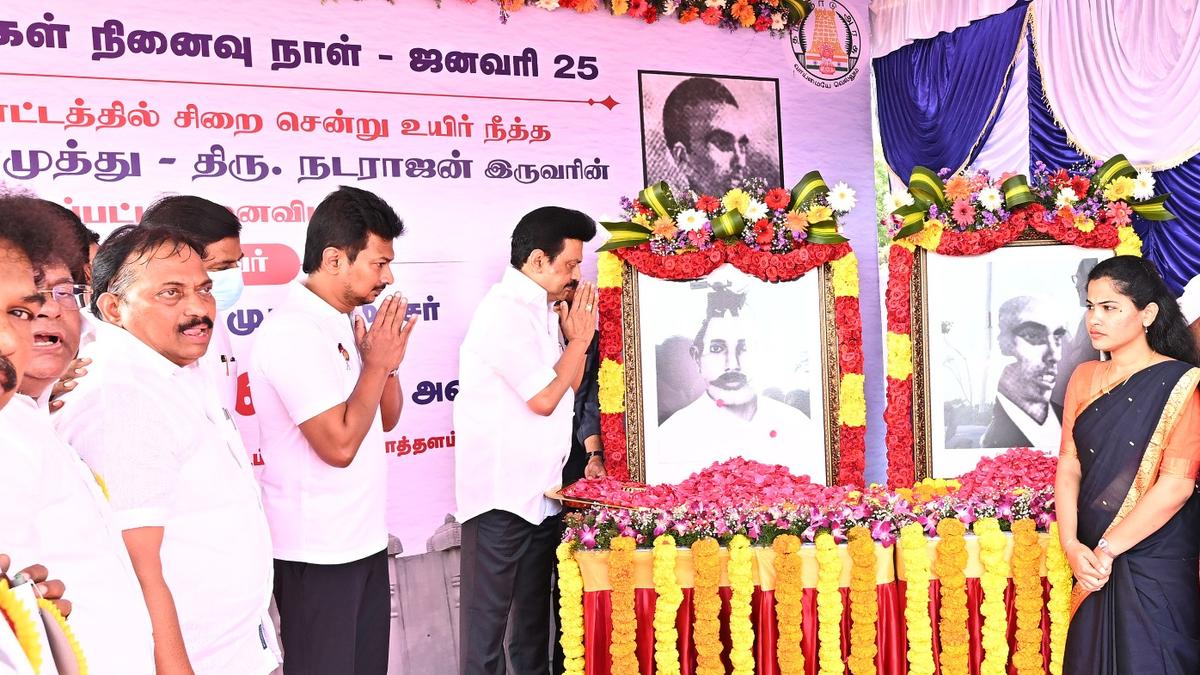
Tamil Nadu Chief Minister M.K. Stalin's recent tribute to Tamil language martyrs underscores the ongoing fight for linguistic identity and freedom. A deeply moving story of sacrifice, this event deserves the spotlight – and we’re going to shed light on this often overlooked yet crucial moment in history.
The Martyrs' Memorial: A Renewed Symbol of Resistance
The renovated memorial of Natarajan and Thalamuthu, two courageous figures who gave their lives for the Tamil language in 1939, stands as a powerful symbol. This ₹34 lakh renovation, inaugurated on January 25th (Tamil Language Martyrs' Day), serves as a testament to their selfless devotion and commitment to linguistic freedom. Imagine the emotional impact of this moment - a renewed commitment to preserving a heritage under constant threat. More than just a building, it’s a sanctuary dedicated to their sacrifice, forever etching the bravery of Natarajan and Thalamuthu in the annals of Tamil history. The renovated memorial ensures their legacy isn't just remembered, it’s celebrated.
The significance of Tamil Mozhi Thiyagigal Naal
The date, January 25th, now officially recognized as Tamil Language Martyrs’ Day, holds a special place in the hearts of Tamils across the globe. This commemoration serves as a potent reminder of the historical struggles waged to protect their cultural identity and preserve their language against the threat of forced assimilation. The ongoing efforts to celebrate this day speaks volumes about the lasting effect that Natarajan and Thalamuthu have had on the future of Tamil. This annual observance emphasizes the unwavering determination to protect linguistic and cultural heritage from external pressure.
Stalin's Tribute and the Push for Continued Recognition
Chief Minister Stalin's presence at the inauguration carried deep symbolic meaning, underscoring the state government’s unwavering support for the preservation of the Tamil language. His floral tributes to Natarajan, Thalamuthu, and Dharmambal Ammaiyar paid respect to their tireless activism and invaluable contributions towards language protection and Tamil culture.
Promises of statues for heroes
Going beyond mere commemoration, the Chief Minister also announced that the memory of these brave activists will be further cemented. In response to a request made by VCK president Thol. Thirumavalavan, statues of Natarajan and Thalamuthu will be erected at the Thalamuthu Natarajan Building in Egmore. This symbolic act intends to solidify their place in the consciousness of future generations, keeping their dedication and spirit alive.
Understanding the 1939 Anti-Hindi Imposition Struggle
The 1939 struggle against Hindi imposition serves as a pivotal moment in the history of the Tamil language movement. The martyrs' dedication and the protests serve as a striking reminder of the determination with which the people fought against language suppression. It wasn't just a simple clash - it highlighted the deep connection between language, culture, and identity. The fight was about preserving the integrity and pride associated with the Tamil language, demonstrating how fierce cultural preservation can be when pushed to its limits. The deep cultural significance of Tamil, a language rooted in centuries-old history and a living connection to the region’s rich past, shines through.
The legacy of Natarajan and Thalamuthu
Understanding Natarajan and Thalamuthu’s sacrifices, therefore, goes beyond mere linguistic battles. It's a powerful tale of resisting domination – a timeless example for any linguistic or cultural group fighting for preservation in the face of assimilation.
Beyond the Memorial: The Ongoing Fight for Linguistic Rights
The memorial is not just a tribute; it’s a call to action – a reminder of the importance of continuing to preserve the Tamil language and protect linguistic diversity everywhere. The unwavering spirit of these martyrs serves as an ongoing inspiration for advocating for linguistic rights both domestically and internationally. Their example empowers ongoing activism in protecting language as a crucial part of the fight for cultural autonomy. The fight for language rights is universal.
The role of language in cultural preservation
Preserving languages isn't about sentimentality alone; it's about the preservation of a community's history, wisdom, and cultural heritage. These intangible factors are closely interwoven with the language, making their preservation a critical battle for future generations. Learning about this event teaches us that culture is intrinsically linked to language - and thus must be protected with tenacity.
Take Away Points:
- The renovated memorial serves as a powerful symbol of Tamil resistance and the ongoing fight for linguistic rights.
- Chief Minister Stalin’s tribute signifies official recognition of the martyrs’ sacrifice and reinforces the state's commitment to preserving the Tamil language.
- The struggle against Hindi imposition in 1939 illustrates the vital link between language, culture, and identity.
- Preserving languages isn’t just about sentimentality; it is preserving history, culture, and community bonds for future generations.


