
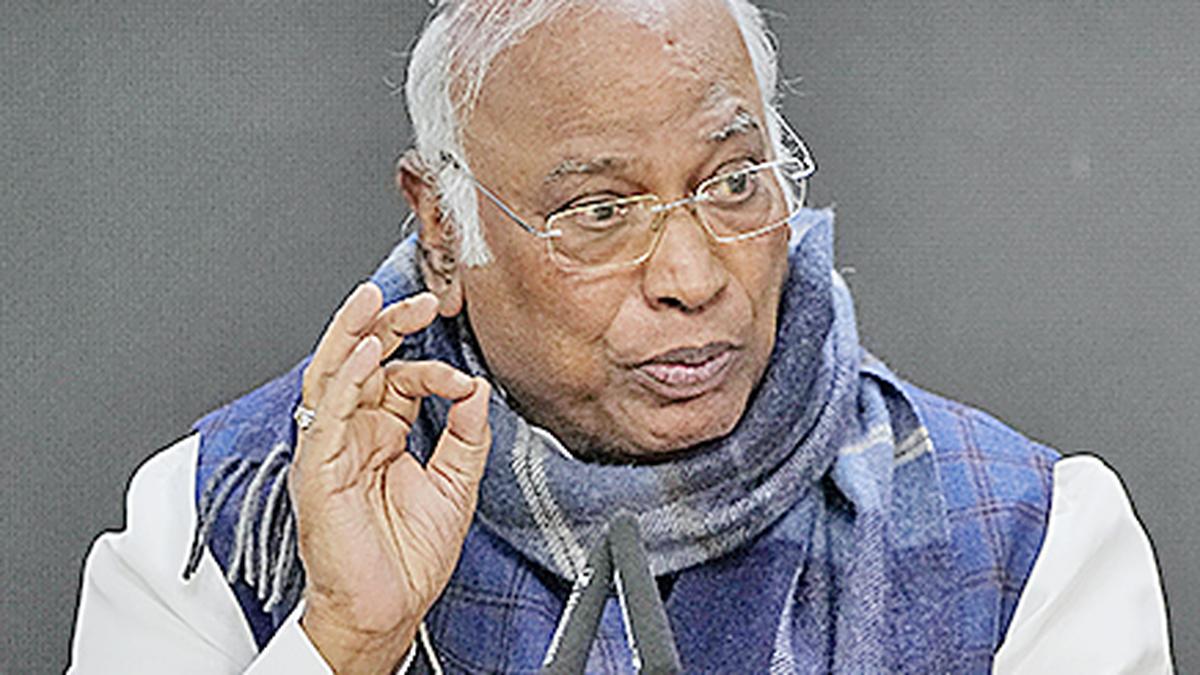
Is India's Constitution Under Siege? Congress President Kharge Sounds the Alarm
In a powerful and passionate address, Congress president Mallikarjun Kharge has issued a stark warning about the state of India's Constitution, alleging a systematic dismantling of its core principles. His Republic Day message painted a grim picture of eroding democratic values, religious intolerance, and economic disparity. This alarming situation has many questioning whether the very soul of India's democracy is under threat.
The Assault on Democratic Institutions
Kharge's criticism targeted what he termed a deliberate assault on India's foundational democratic pillars. He condemned political interference in autonomous institutions, describing this blatant disregard for institutional independence as "a virtue of power." He added that federalism is under attack, with the rights of opposition-governed states routinely suppressed. This echoes concerns from many observers about centralization of power and a decline in regional autonomy. The situation demands an urgent review of the methods currently used to exercise authority across all levels of governance and the impact these methods have on the principles of federalism, equality, and justice.
A Parliament Under Pressure
The functioning of the Parliament itself, according to Kharge, has deteriorated severely. He alleged "tyrannical tendencies" within the ruling government and their direct effect on parliamentary processes, preventing healthy debate and the ability of representatives to voice differing viewpoints. Such obstruction and impediment to proper governmental function demands comprehensive assessment to assess the long term effects on the country's stability.
Universities Under Threat
Furthermore, the Congress president pointed to concerns about interference in the governance of India's universities and educational institutions. This alleged intrusion undermines academic freedom and the integrity of learning. The ability of scholars to conduct research freely without bias, censorship or external pressures underpins the progress of society and any external restrictions should be condemned. Independent universities and academic environments have always been instrumental in pushing forward knowledge and innovation. Consequently, protection of their independent function, free of any form of governmental intrusion or political pressure, is non-negotiable.
The Spread of Religious Fundamentalism and Hate Speech
Kharge's speech condemned a pervasive narrative of hate, which he tied directly to a rising tide of religious fundamentalism. This divisive agenda has allegedly fractured Indian society, leaving behind a climate of prejudice and fear. Such harmful tendencies create an environment that fosters instability within the nation. Religious extremism breeds intolerance, threatens national cohesion, and challenges the essence of India’s secular character. By fostering a society of mutual tolerance and mutual respect and celebrating diversity, peace and stability can be restored. There is a pressing need to safeguard minorities against discrimination and persecution.
Targeting Minorities and Dissent
He highlighted the targeting of minority groups, and how those who dare to speak out against the prevailing narrative are often labeled as anti-national. This deliberate suppression of dissent stifles critical thought and erodes the principles of freedom of speech. Independent reporting should never be categorized as being treasonous or subversive, yet that has become alarmingly frequent. Freedom of expression has always been one of the core values underpinning a democratic society. Silencing dissent limits access to crucial, divergent, opinions which serve as a check against tyranny and help improve standards of living. These are crucial parts of a functioning democracy.
Economic Inequality and Crony Capitalism
Beyond political concerns, Kharge emphasized that widening economic inequality has reached alarming proportions. He highlighted a system of crony capitalism, where privileged individuals are unduly favored over common citizens. This blatant bias favors those who have access to money and political connections and ignores those who may need support more. This is damaging because it creates a climate of economic insecurity which impacts livelihoods, opportunities, and ultimately peace and stability in the long run. In addition, there are many economic pressures impacting those who make up the lower and middle classes, putting additional strain on the citizenry.
Crushing Whistleblowers
Kharge further alleges that whistleblowers who dare to expose corruption are frequently smeared as anti-national. This intimidation tactic silences those who would hold the powerful accountable. It also stifles those who want to shine a light on illegal and unethical practices, therefore preventing needed transparency and reform. This chilling effect needs to be acknowledged, denounced and prevented. When people are penalized for trying to bring wrongdoing to light, it harms everybody.
The Path Forward: Protecting the Constitution
Kharge's message served as an urgent plea to uphold and defend the Indian Constitution. He emphasized the need to actively preserve its ideals—justice, liberty, equality, and fraternity. These are principles of foundational importance and should never be taken for granted. Safeguarding the constitutional structure demands not only vigilance, but proactive actions to mitigate abuses and promote accountability. His conclusion urges for national solidarity. People need to stand together to protect the Indian constitution.
Take Away Points
- Mallikarjun Kharge's address raised serious concerns about India's democratic institutions, minority rights, and economic equality.
- He criticized political interference in autonomous institutions and the stifling of dissent.
- Kharge highlighted a concerning increase in religious fundamentalism and hate speech, claiming it is fracturing society.
- He called for a unified effort to protect the Indian Constitution and its core values.


