
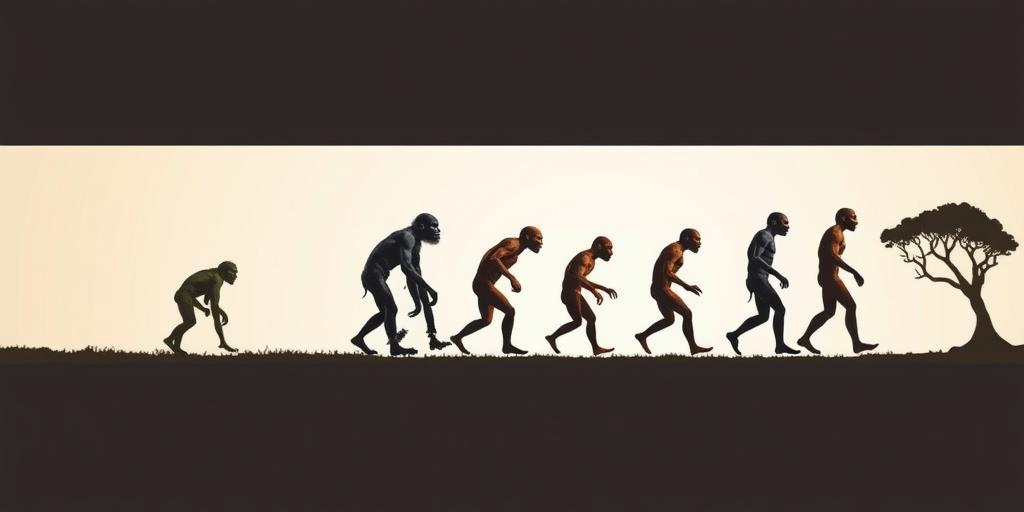
Human evolution is the long and complex process of change by which people originated from apelike ancestors. Scientific study of human evolution involves many scientific disciplines, including physical anthropology, primatology, archaeology, paleontology, neurobiology, genetics, and linguistics.
Key Stages in Human Evolution
- Australopithecus: These early hominins, like the famous 'Lucy,' walked upright but had smaller brains. They lived in Africa between 4 and 2 million years ago.
- Homo habilis: Known as 'handy man,' this species used primitive stone tools. They lived in Africa around 2.4 to 1.4 million years ago.
- Homo erectus: This species was the first to migrate out of Africa. They used more sophisticated tools and possibly controlled fire. They lived from about 1.9 million to 110,000 years ago.
- Homo neanderthalensis: Neanderthals were closely related to modern humans and lived in Europe and Asia. They were skilled hunters and toolmakers. They lived from about 400,000 to 40,000 years ago.
- Homo sapiens: Modern humans evolved in Africa about 300,000 years ago. We have larger brains, complex social structures, and advanced technology.
Fossil Evidence and Genetic Insights
The fossil record provides crucial evidence of human evolution. Fossils of early hominins show the gradual changes in anatomy that led to modern humans. Genetic studies compare the DNA of humans and other primates, revealing how closely related we are and when our evolutionary paths diverged.
The Role of Environment and Culture
Environmental changes and cultural developments have played significant roles in human evolution. As environments changed, different traits became advantageous. Cultural innovations, such as tool use and social cooperation, also drove evolutionary changes.


