
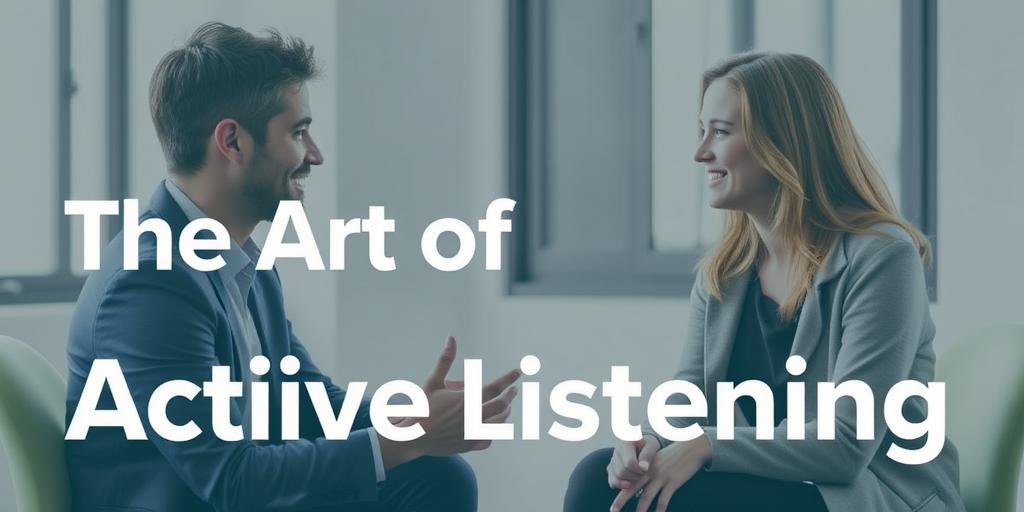
The Art of Active Listening
Active listening is a crucial communication skill that involves fully concentrating, understanding, responding, and remembering what is being said. It's more than just hearing the words; it's about grasping the complete message the speaker is trying to convey. This post will explore the key components of active listening and how to develop this invaluable skill.
What is Active Listening?
Active listening is a specific way of hearing what someone says and showing that you understand. It requires you to be attentive and engaged, not just passively hearing words. Effective active listening fosters better communication, deeper relationships, and increased understanding in both personal and professional settings.
Key Components of Active Listening
Pay Attention:
- Focus fully on the speaker. Give your undivided attention, and acknowledge the message.
- Recognize and reduce distractions. Turn off the TV, put down your phone, and minimize interruptions.
- Observe body language. Notice non-verbal cues such as posture, gestures, and facial expressions.
Show That You’re Listening:
- Use non-verbal cues. Nod occasionally, smile, and make eye contact.
- Use verbal affirmations. Say things like “yes” or “I see” to show you’re following along.
Provide Feedback:
- Reflect the speaker’s feelings. Try to understand and acknowledge the emotional content of the message.
- Ask clarifying questions. This helps you understand the message more clearly and shows the speaker you’re engaged.
Defer Judgment:
- Listen without interrupting. Allow the speaker to finish their thoughts before you respond.
- Avoid jumping to conclusions. Try to understand the speaker’s perspective fully before forming an opinion.
Respond Appropriately:
- Be honest and respectful. Offer your opinions and advice in a constructive manner.
- Summarize and clarify. Before moving on, summarize the main points to ensure mutual understanding.
Benefits of Active Listening
- Improved Communication: Active listening reduces misunderstandings and promotes clear, effective communication.
- Stronger Relationships: Showing genuine interest in what others have to say builds trust and strengthens relationships.
- Increased Understanding: Active listening helps you fully grasp the speaker's message, including the emotional content.
- Better Problem Solving: By fully understanding the issue, you can contribute more effectively to finding solutions.
- Enhanced Productivity: In professional settings, active listening minimizes errors and improves team collaboration.
How to Practice Active Listening
- Start Small: Begin by practicing active listening in low-stakes conversations.
- Be Patient: It takes time and practice to develop active listening skills.
- Seek Feedback: Ask friends, family, or colleagues for feedback on your listening skills.
- Reflect on Your Conversations: After a conversation, think about how well you listened and where you could improve.
Conclusion
Active listening is a skill that can significantly enhance your communication and relationships. By paying attention, showing that you’re listening, providing feedback, deferring judgment, and responding appropriately, you can become a more effective communicator and build stronger connections with those around you. Start practicing these techniques today and experience the transformative power of active listening.


