
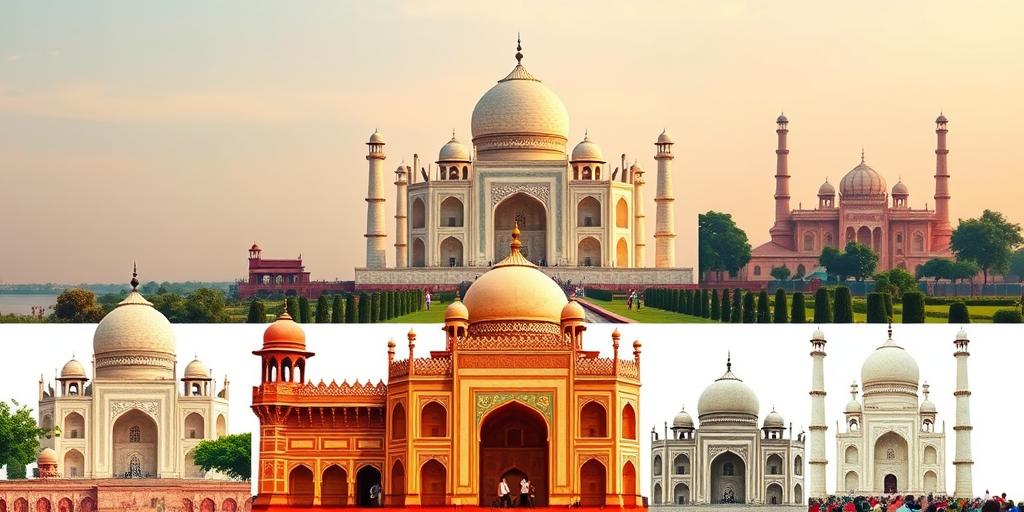
The Story Behind India's Iconic Monuments
India, a land of vibrant culture and rich history, is home to some of the world's most iconic monuments. These architectural marvels stand as testaments to the country's diverse heritage, artistic prowess, and historical narratives. From the Taj Mahal to the Red Fort, each monument has a unique story to tell. Let's delve into the history and significance of some of India's most famous landmarks.
The Taj Mahal: A Symbol of Eternal Love
The Taj Mahal, located in Agra, is perhaps the most recognizable monument in India. Built by Mughal Emperor Shah Jahan in memory of his beloved wife, Mumtaz Mahal, this ivory-white marble mausoleum is a masterpiece of Mughal architecture. Construction began in 1632 and was completed in 1648, employing thousands of artisans and craftsmen.
The Taj Mahal is renowned for its perfect symmetry, intricate carvings, and exquisite inlay work. The central dome, towering at 240 feet, is surrounded by four minarets, creating a breathtaking silhouette against the skyline. The monument is set within a vast Mughal garden, complete with reflecting pools that enhance its beauty.
- Historical Significance: The Taj Mahal symbolizes the profound love between Shah Jahan and Mumtaz Mahal. It is a UNESCO World Heritage Site and attracts millions of visitors each year.
The Red Fort: A Symbol of Mughal Power
The Red Fort, also known as Lal Qila, is located in Delhi and served as the main residence of the Mughal emperors. Built by Emperor Shah Jahan in the 17th century, the fort is a magnificent example of Mughal architecture. Its red sandstone walls stretch for over two kilometers, enclosing a complex of palaces, gardens, and ceremonial halls.
The fort's Diwan-i-Aam (Hall of Public Audience) and Diwan-i-Khas (Hall of Private Audience) are adorned with intricate carvings and precious stones, reflecting the opulence of the Mughal court. The Red Fort has witnessed many significant events in Indian history, including the declaration of independence by Jawaharlal Nehru in 1947.
- Historical Significance: The Red Fort represents the zenith of Mughal power and architectural achievement. It is a UNESCO World Heritage Site and a symbol of India's sovereignty.
Qutub Minar: A Tower of Victory
The Qutub Minar, located in Delhi, is a towering minaret that stands as a testament to the Delhi Sultanate's architectural prowess. Construction began in the late 12th century by Qutb-ud-din Aibak and was completed by his successors. The minaret is made of red sandstone and marble, featuring intricate carvings and inscriptions.
Rising to a height of 73 meters, the Qutub Minar is one of the tallest minarets in India. It is surrounded by a complex of historical monuments, including the Quwwat-ul-Islam Mosque, one of the earliest mosques built in India.
- Historical Significance: The Qutub Minar symbolizes the establishment of Muslim rule in India and the fusion of Indo-Islamic architectural styles. It is a UNESCO World Heritage Site and a popular tourist destination.
Hawa Mahal: The Palace of Winds
The Hawa Mahal, located in Jaipur, is a unique five-story palace known for its intricate façade and numerous windows. Built in 1799 by Maharaja Sawai Pratap Singh, the palace allowed royal women to observe street festivals and daily life without being seen.
The Hawa Mahal is made of red and pink sandstone, featuring a honeycomb-like structure with 953 small windows, known as 'jharokhas.' These windows allow cool air to circulate, keeping the palace comfortable during the hot summer months.
- Historical Significance: The Hawa Mahal represents the architectural ingenuity and cultural traditions of Rajasthan. It is a prominent landmark in Jaipur and a testament to the region's rich heritage.
Victoria Memorial: A Tribute to the British Raj
The Victoria Memorial, located in Kolkata, is a grand marble building dedicated to Queen Victoria. Built in the early 20th century, the memorial showcases a blend of British and Mughal architectural styles. It houses a museum that displays artifacts and exhibits related to British India.
The memorial's central dome is topped with a bronze statue of the Angel of Victory. The surrounding gardens add to the monument's grandeur, making it a popular destination for tourists and locals alike.
- Historical Significance: The Victoria Memorial symbolizes the British Raj and its influence on Indian architecture and culture. It is a significant landmark in Kolkata and a reminder of India's colonial past.
Conclusion
India's iconic monuments are more than just architectural marvels; they are storytellers of history, culture, and human emotions. From the Taj Mahal's eternal love story to the Red Fort's tales of Mughal power, each monument offers a glimpse into India's rich and diverse heritage. These landmarks continue to inspire and captivate visitors from around the world, serving as timeless reminders of India's glorious past.


