
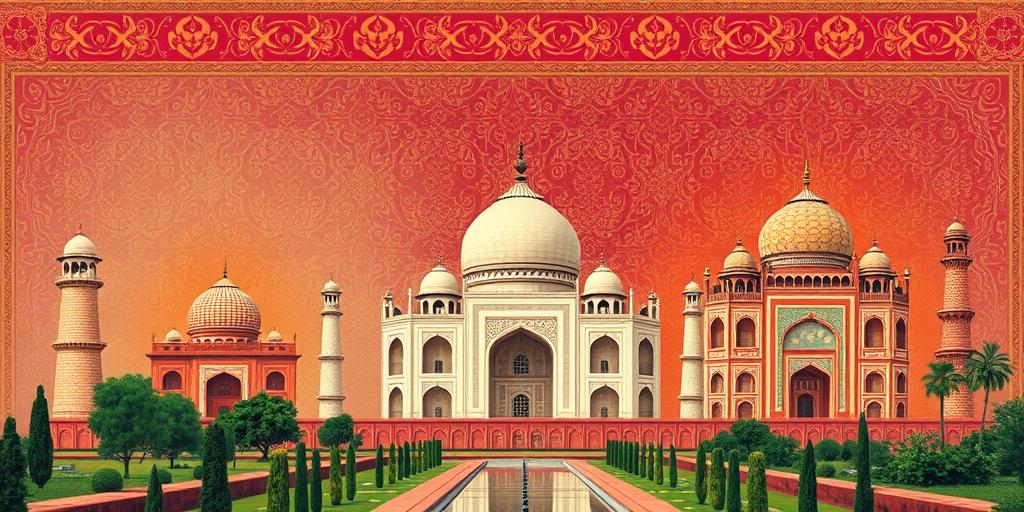
The Mughal Empire, a powerful dynasty of Turkic-Mongol origin, ruled over a vast portion of the Indian subcontinent from the early 16th to the mid-18th century. While its political dominance waned, its cultural, artistic, architectural, and administrative contributions have left an indelible mark on India's identity. This post explores the multifaceted legacy of the Mughals.
Administrative and Political Legacy
The Mughals implemented a centralized administrative system that, while autocratic, brought a degree of uniformity and efficiency to governance. Key aspects of their administrative legacy include:
- Land Revenue System: The Mughals refined and standardized the land revenue system, a critical source of income for the empire. The 'zabt' system, introduced by Akbar, involved land surveys and assessment of revenue based on productivity, which provided a degree of predictability and fairness.
- Mansabdari System: This unique system integrated the military and civil administration. Officials, or 'mansabdars,' were assigned ranks ('mansabs') and provided military contingents to the empire. This system allowed for efficient mobilization of the army and fostered loyalty to the emperor.
- Centralized Bureaucracy: The Mughals established a well-organized bureaucracy with departments overseeing finance, military affairs, justice, and the royal household. This structure facilitated efficient governance and communication across the empire.
Cultural and Artistic Contributions
The Mughal era is considered a golden age for Indian culture and art. The Mughals were great patrons of art, literature, music, and architecture, fostering a synthesis of Persian, Islamic, and Indian styles.
- Architecture: Mughal architecture is renowned for its grandeur, symmetry, and intricate ornamentation. Iconic examples include the Taj Mahal, a masterpiece of marble inlay work; Fatehpur Sikri, a planned city showcasing Mughal architectural ingenuity; and Humayun's Tomb, a precursor to the Taj Mahal. These structures blend Persian and Indian architectural elements, creating a distinct Mughal style.
- Painting: Mughal painting evolved as a unique blend of Persian miniature painting and Indian artistic traditions. Mughal emperors, particularly Akbar, commissioned elaborate illustrated manuscripts and portraits. Mughal paintings are characterized by their delicate brushwork, vibrant colors, and realistic depiction of court life, flora, and fauna.
- Literature: The Mughal period saw a flourishing of literature in Persian, Urdu, and Hindi. Persian was the court language, and many important historical and literary works were produced in this language, including the 'Akbarnama' and the 'Ain-i-Akbari.' Urdu, a new language that evolved from the interaction of Persian and local Indian languages, also gained prominence during this era.
Social and Economic Impact
The Mughal Empire had a profound impact on Indian society and economy.
- Religious Syncretism: The Mughal emperors, particularly Akbar, promoted religious tolerance and sought to foster harmony between different religious communities. Akbar's 'Din-i-Ilahi,' though short-lived, was an attempt to synthesize elements of different religions.
- Economic Growth: The Mughal Empire was one of the wealthiest in the world during its peak. It fostered trade and commerce, both internally and externally. Indian textiles, spices, and other goods were in high demand in Europe and other parts of the world. The Mughals also invested in infrastructure, such as roads and irrigation systems, which further boosted economic activity.
- Cultural Exchange: The Mughal era facilitated a significant exchange of ideas and cultural practices between India and other parts of the world, particularly Persia and Central Asia. This exchange enriched Indian culture and contributed to its diversity.
Decline and Legacy
The Mughal Empire began to decline in the 18th century due to internal conflicts, economic problems, and the rise of regional powers. However, its legacy continues to shape India today.
- Language: Urdu, which originated during the Mughal period, is one of the official languages of India and Pakistan and is widely spoken in many parts of the subcontinent.
- Cuisine: Mughal cuisine, characterized by its rich flavors, aromatic spices, and use of nuts and dried fruits, has become an integral part of Indian culinary tradition. Dishes such as biryani, kebabs, and korma are popular examples of Mughal culinary influence.
- Art and Architecture: Mughal architectural styles continue to inspire contemporary Indian architecture. Mughal motifs and designs are also commonly used in Indian textiles, handicrafts, and other art forms.
In conclusion, the Mughal Empire's legacy in India is vast and multifaceted. Its administrative, cultural, artistic, and economic contributions have left an enduring impact on the country's identity and continue to shape its present and future.


