
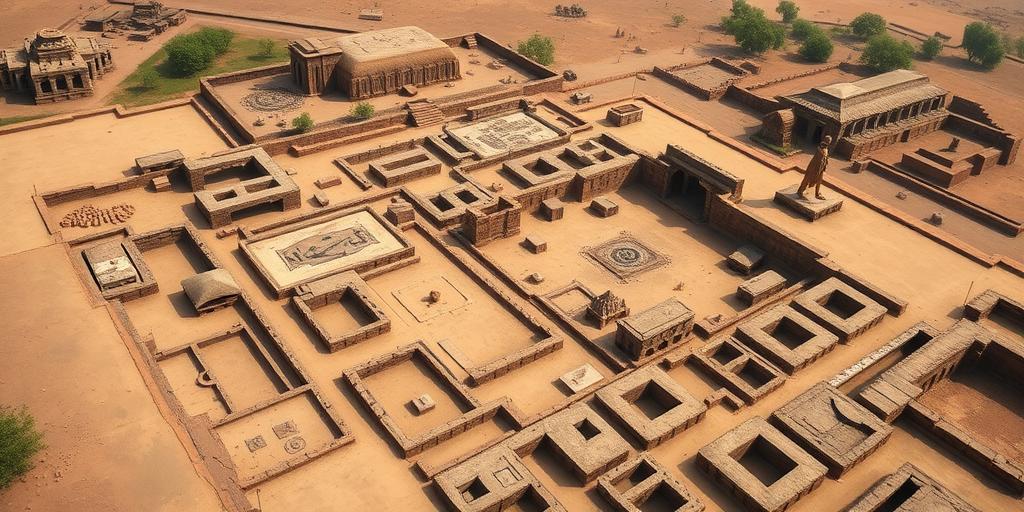
The Indus Valley Civilization (IVC), also known as the Harappan Civilization, flourished from approximately 3300 to 1700 BCE in the northwestern regions of the Indian subcontinent. This Bronze Age civilization was remarkable for its urban planning, sophisticated infrastructure, and extensive trade networks. Despite its advancements, many aspects of the IVC remain shrouded in mystery, primarily due to the undeciphered Indus script.
Key Features of the Indus Valley Civilization:
- Urban Planning and Architecture: The cities of Harappa and Mohenjo-daro showcase meticulous urban planning. They featured grid-like layouts with well-organized streets, drainage systems, and residential areas. Buildings were constructed using standardized baked bricks, indicating a high degree of engineering and architectural skill.
- Advanced Infrastructure: One of the most impressive aspects of the IVC was its advanced sanitation and water management systems. Cities had elaborate drainage networks with covered drains, soak pits, and refuse bins, which helped maintain hygiene and prevent waterborne diseases. Public wells and reservoirs provided a reliable water supply to the inhabitants.
- Economic Activities: The economy of the IVC was based on agriculture, trade, and crafts. The fertile Indus River valley supported the cultivation of wheat, barley, cotton, and various fruits and vegetables. Evidence suggests extensive trade relations with Mesopotamia, Central Asia, and other regions. Craft specialization was evident in the production of pottery, textiles, jewelry, and metalwork.
- Social Organization: While the exact nature of the social and political organization of the IVC remains unclear, archaeological evidence suggests a hierarchical society with a centralized administration. The presence of large public structures, such as granaries and citadels, indicates a degree of social control and resource management. However, there is limited evidence of warfare or monumental architecture associated with rulers, suggesting a relatively egalitarian society.
- Art and Culture: The Indus Valley Civilization produced a variety of artifacts, including pottery, seals, figurines, and jewelry. The famous "Dancing Girl" bronze statue and the intricate steatite seals depicting animals and human figures provide insights into the artistic and cultural traditions of the IVC. The undeciphered Indus script, found on seals and pottery, continues to puzzle archaeologists and linguists.
Mysteries and Unanswered Questions:
Despite the wealth of archaeological evidence, several mysteries surround the Indus Valley Civilization:
- The Indus Script: The inability to decipher the Indus script is perhaps the biggest challenge in understanding the IVC. The script consists of around 400 distinct symbols, but its linguistic structure and meaning remain unknown. Various theories have been proposed, but none have gained widespread acceptance.
- Decline and Collapse: The reasons for the decline and eventual collapse of the IVC around 1700 BCE are still debated. Theories include climate change, environmental degradation, invasion, and shifts in trade patterns. It is likely that a combination of factors contributed to the decline of this once-thriving civilization.
- Religious Beliefs: The religious beliefs and practices of the Indus people are not well understood. Unlike other ancient civilizations, there is a lack of monumental religious structures or depictions of deities. However, evidence suggests the worship of natural forces, fertility cults, and possibly a proto-Shiva figure.
- Social Structure: The precise nature of the social hierarchy and political organization of the IVC remains unclear. While there is evidence of social stratification, the absence of clear indications of rulers or a priestly class makes it difficult to reconstruct the social dynamics of the civilization.
The Indus Valley Civilization stands as a testament to human ingenuity and innovation. Its advanced urban planning, infrastructure, and economic systems demonstrate a high level of social organization and technological prowess. However, the mysteries surrounding its script, decline, and religious beliefs continue to intrigue and challenge researchers. Further archaeological discoveries and interdisciplinary research are needed to unlock the secrets of this ancient civilization and gain a deeper understanding of its place in human history.


