
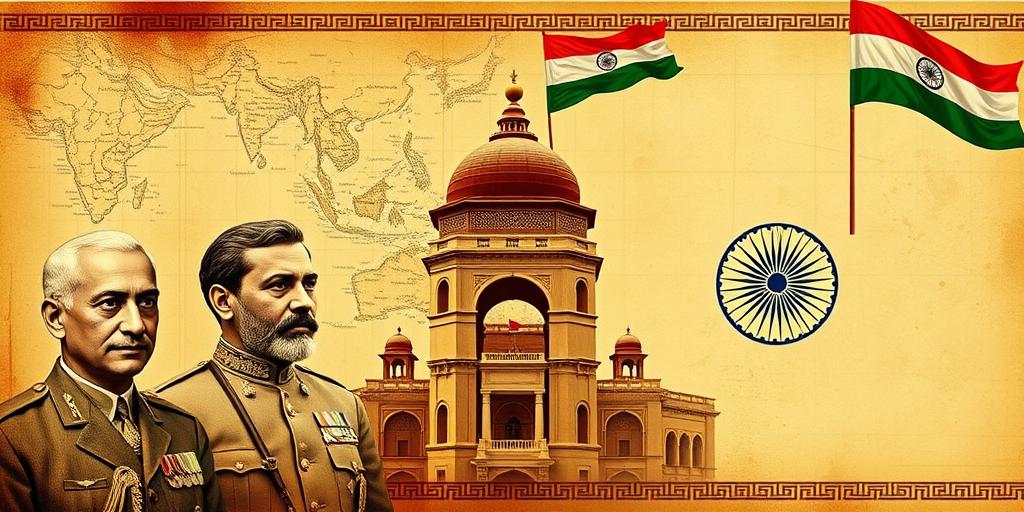
The British Raj: Impact and Aftermath
The British Raj, meaning "rule" in Hindi, refers to the period of British rule on the Indian subcontinent between 1757 and 1947. This era profoundly shaped the political, economic, social, and cultural landscapes of India, leaving a complex legacy that continues to influence the region today.
Historical Context
The British East India Company's victory at the Battle of Plassey in 1757 marked the beginning of British dominance. Gradually, the Company expanded its control through treaties, wars, and annexation, leading to the establishment of direct British rule after the Sepoy Mutiny of 1857. Queen Victoria was proclaimed Empress of India in 1877, solidifying British authority.
Political Impact
The British Raj introduced a centralized administrative system, legal frameworks, and parliamentary institutions. While these systems provided a semblance of order and governance, they were often implemented to serve British interests. Key political impacts include:
- Centralized Administration: Implementation of a unified administrative structure, replacing diverse regional systems.
- Legal System: Introduction of British common law, which, while providing a standardized legal code, often marginalized traditional laws.
- Emergence of Nationalism: The oppressive nature of British rule spurred the growth of Indian nationalism, leading to movements for self-governance.
Economic Impact
The economic policies of the British Raj had far-reaching consequences. While some infrastructure developments were beneficial, the overall impact was detrimental to the Indian economy. Key economic impacts include:
- Deindustrialization: British policies led to the decline of Indian industries, particularly textiles, as cheap British manufactured goods flooded the market.
- Land Revenue Systems: Introduction of systems like the Zamindari and Ryotwari, which often exploited farmers and led to widespread landlessness.
- Infrastructure Development: Investment in railways, roads, and irrigation projects, primarily to facilitate trade and administration.
Social and Cultural Impact
The British Raj brought about significant social and cultural changes, some of which were transformative. Key social and cultural impacts include:
- Education: Establishment of educational institutions that introduced Western knowledge and ideas, leading to the emergence of a new educated class.
- Social Reforms: Efforts to abolish practices like Sati and promote widow remarriage, though these reforms were often limited in scope and effectiveness.
- Cultural Exchange: Exposure to Western culture and ideas, leading to a blend of Eastern and Western influences in art, literature, and philosophy.
The Partition of India
The culmination of the British Raj was the partition of India in 1947, which led to the creation of independent India and Pakistan. This event resulted in widespread violence, displacement, and communal tensions, leaving a lasting scar on the region.
Legacy
The legacy of the British Raj is complex and multifaceted. While it introduced modern systems and institutions, it also resulted in economic exploitation, social disruption, and political division. The impact of British rule continues to shape the political, economic, and social dynamics of the Indian subcontinent.
Conclusion
The British Raj was a pivotal period in Indian history, marked by profound changes and lasting consequences. Understanding its impact is crucial for comprehending the contemporary realities of India and the broader region.


