
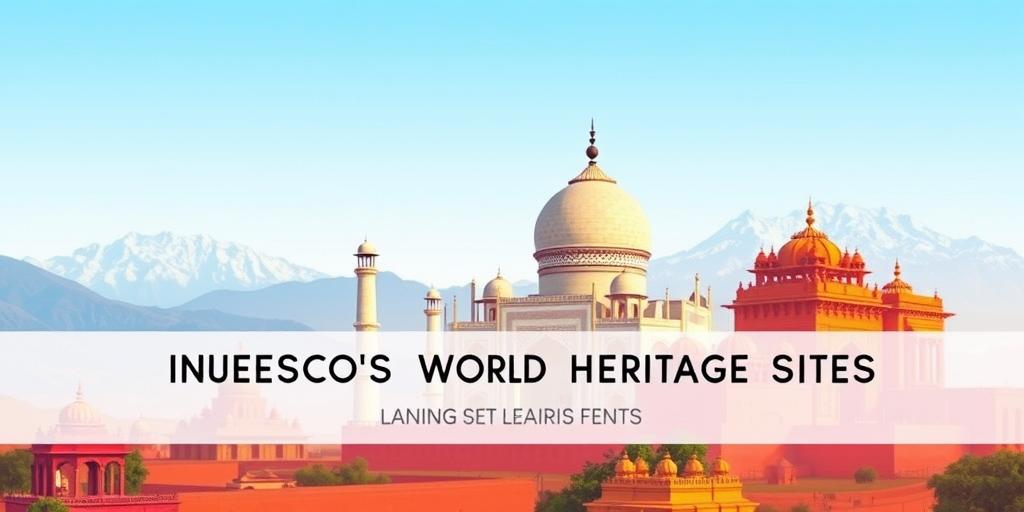
India, a land of vibrant culture and rich history, is home to a remarkable array of UNESCO World Heritage Sites. These sites, recognized for their outstanding universal value, offer a glimpse into the country's diverse heritage, spanning architectural marvels, natural wonders, and cultural landscapes. Let's embark on a journey to explore some of India's most captivating UNESCO World Heritage Sites.
Architectural Wonders
- Taj Mahal, Agra: An ivory-white marble mausoleum commissioned in 1632 by the Mughal emperor Shah Jahan to house the tomb of his favorite wife, Mumtaz Mahal. It stands as a symbol of eternal love and is an exquisite example of Mughal architecture.
- Fatehpur Sikri, Uttar Pradesh: A magnificent fortified city built by Emperor Akbar in the 16th century. Abandoned shortly after its completion due to water scarcity, it preserves an extraordinary collection of palaces, mosques, and courtyards.
- Khajuraho Group of Monuments, Madhya Pradesh: Renowned for their intricate sculptures and architectural symbolism, these temples built during the Chandela dynasty depict various aspects of life, including spiritual teachings, warfare, and erotic art.
- Ajanta and Ellora Caves, Maharashtra: These rock-cut cave temples showcase the evolution of Indian art and architecture. Ajanta is famous for its Buddhist murals, while Ellora features a unique blend of Buddhist, Hindu, and Jain temples.
Natural Splendors
- Kaziranga National Park, Assam: Home to the world's largest population of one-horned rhinoceroses, this park also harbors a diverse array of wildlife, including elephants, tigers, and migratory birds.
- Keoladeo National Park, Rajasthan: A haven for birdwatchers, this wetland sanctuary attracts thousands of migratory birds each year, including rare and endangered species.
- Sundarbans National Park, West Bengal: The world's largest mangrove forest, home to the Royal Bengal tiger, as well as numerous other species of flora and fauna adapted to the unique estuarine environment.
- Great Himalayan National Park Conservation Area, Himachal Pradesh: Characterized by high alpine peaks, glaciers, and lush forests, this park is a biodiversity hotspot, harboring a wide range of plant and animal species.
Cultural Landscapes
- Hampi, Karnataka: The ruins of the Vijayanagara Empire's capital, a magnificent city dotted with temples, palaces, and market streets. Hampi's dramatic landscape, with its rocky terrain and boulder-strewn hills, adds to its allure.
- Chhatrapati Shivaji Maharaj Terminus (formerly Victoria Terminus), Mumbai: A historic railway station blending Victorian Gothic Revival architecture with traditional Indian elements. It stands as a symbol of Mumbai's colonial past and its vibrant present.
- Mountain Railways of India: Darjeeling Himalayan Railway, Nilgiri Mountain Railway, and Kalka-Shimla Railway. These three railways represent outstanding examples of innovative engineering solutions that established crucial links through the rugged mountainous terrain of the Himalayas.


