
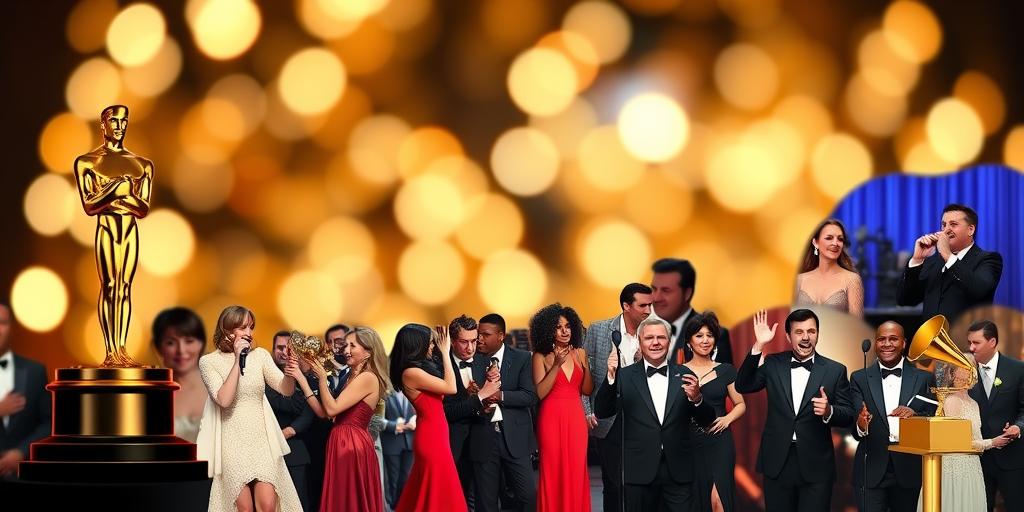
Alright, award show fanatics! Let’s dive headfirst into the dazzling, dramatic, and sometimes downright bizarre world of major awards shows. We're talking Oscars, Emmys, Grammys, Tonys – the whole shebang! Buckle up, because we're about to take a wild ride through their history and evolution.
The Early Days: Radio and Black-Tie Affairs
Back in the day, before streaming and Twitter meltdowns, awards shows were pretty darn different. Imagine the first Academy Awards in 1929. Only 270 people attended! It was more like a fancy dinner party than the global spectacle it is today. These early ceremonies were primarily radio events, aimed at boosting the prestige (and sales) of the industries they celebrated. The vibe? Super formal, black-tie all the way.
The Rise of Television: Bringing the Stars to Your Living Room
The game changed when television entered the scene. Suddenly, regular folks could watch their favorite stars get honored from the comfort of their own couches. This was HUGE. The Emmys (celebrating television) arrived in 1949, followed by the Grammys (music) in 1959, both capitalizing on this new medium. Think about it – for the first time, you weren't just hearing about it; you were seeing it all unfold! Red carpets, acceptance speeches, awkward presenter jokes… TV brought it all to life.
Cultural Impact: More Than Just Golden Statues
Awards shows aren't just about handing out trophies. They reflect and influence our culture in major ways. From iconic fashion moments (remember Bjork's swan dress?) to powerful political statements (Marlon Brando sending Sacheen Littlefeather to the Oscars), these events often become part of the cultural conversation. They boost careers, spark debates, and sometimes, even change the course of history. Ever notice how a little-known film suddenly blows up after winning Best Picture? That’s the power of the gold statue, baby!
The Digital Age: Live Tweeting and Viral Moments
Fast forward to today, and awards shows are a multi-screen experience. Live tweeting, viral memes, instant reactions – the digital age has transformed how we consume these events. Remember when Ellen DeGeneres took that star-studded selfie at the Oscars? Or when Leonardo DiCaprio finally won his Oscar, and the internet exploded with joy? These moments wouldn't have been possible without social media.
Controversies and Criticisms: It's Not All Glamour
Of course, no history of awards shows would be complete without mentioning the controversies. From accusations of bias and lack of diversity (remember #OscarsSoWhite?) to debates about the relevance of the awards themselves, there's always something to talk about. Are these shows just popularity contests? Do they truly recognize artistic merit? These are questions worth asking.
What’s Next? The Future of Awards Shows
So, what does the future hold? With changing viewing habits and the rise of streaming services, awards shows need to adapt to stay relevant. We might see more emphasis on digital engagement, shorter ceremonies, and a greater focus on diversity and inclusion. One thing's for sure: as long as we love celebrating talent and achievements, awards shows will continue to evolve and surprise us.
Final Thoughts: The Enduring Appeal
Despite all the changes and controversies, awards shows still hold a certain magic. They offer a glimpse into the world of glitz and glamour, celebrate creativity, and give us something to talk about. Whether you're a die-hard fan or a casual observer, there's no denying their enduring appeal. So grab your popcorn, settle in, and enjoy the show! Who knows what iconic moment will happen next?


